Introduction
Our research focuses on understanding how land management practices influence greenhouse gas and reactive trace gas emissions and how these practices can be adapted to minimize the negative impact of managed lands on climate, water, and air quality. Our research is conducted across diverse systems including restored wetlands and agricultural land. We employ field monitoring and manipulation techniques in addition to process-based biogeochemical modeling with particular emphasis on greenhouse gas and reactive trace gas emissions. We collaborate with regional to global-scale modeling projects and are actively incorporating models into carbon policies in California.
|
Research in Coastal WetlandsSan Francisco Bay
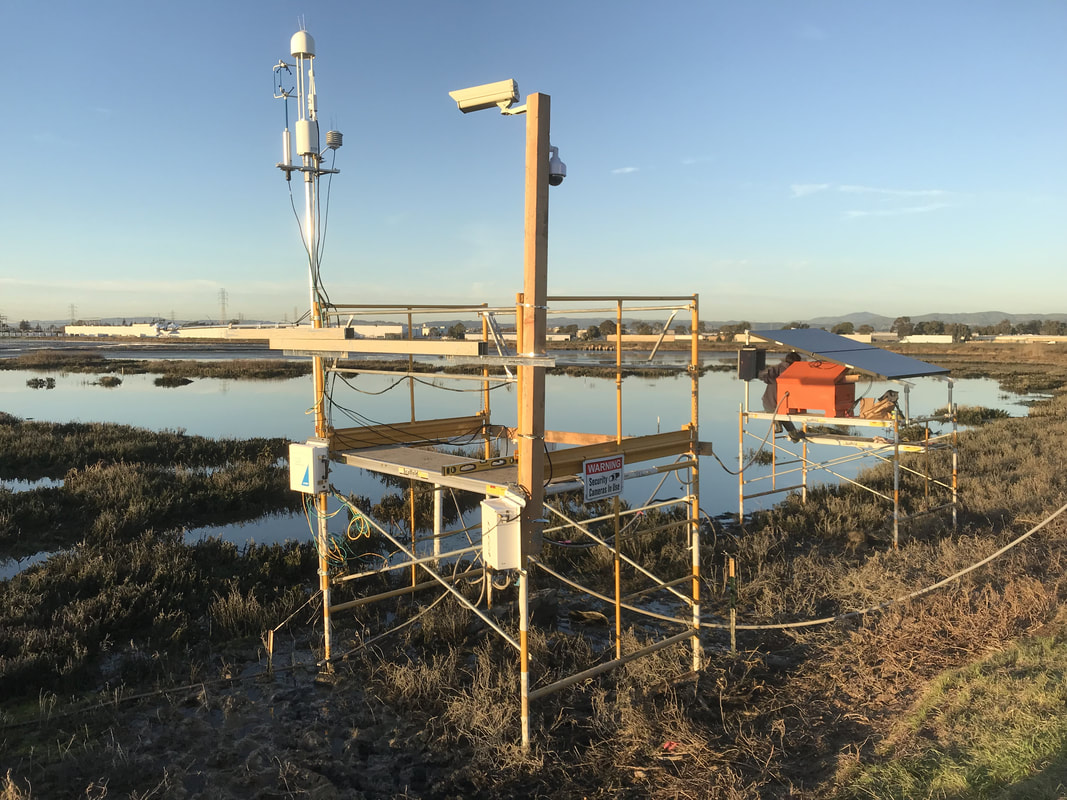
We are investigating carbon cycling in tidal wetlands, where both atmospheric and hydrologic carbon fluxes significantly influence ecosystem carbon balance and soil carbon accumulation rates. Currently, we are running an eddy covariance tower in the Eden Landing Ecological Reserve, located 15min from CSUEB Hayward campus. This site includes measurements of atmospheric exchange of carbon dioxide and methane. This site is funded in part by a Delta Science Program grant, focused on constraining net ecosystem carbon budgets in tidal marshes in the Bay-Delta. We will be adding lateral carbon flux measurements in the summer of 2020. We are also working to advance remote sensing data in tidally flooded marshes and use the data to improve modeling of greenhouse gases in these systems. The modeling tool will be made publicly available through Google Earth Engine. This site is also funded in part by a NASA CMS grant focused on collecting CH4 measurements from tidal marshes along 3 coastlines of the US and experimenting with remote sensing products to improve CH4 budgets through the development of better salinity maps and forecasting tools. Sacramento-San Joaquin Delta We are investigating how land management and carbon credit protocols can be used to protect a critical water supply: the Sacramento-San Joaquin River Delta. Our work in the Delta is focused on studying the greenhouse gas effect of converting drained agricultural lands back to flooded conditions, thereby reversing soil subsidence, protecting an important water supply and providing wildlife habitat. We are using ecosystem and soil scale flux measurements to inform process-based model development that can be used to predict greenhouse gas emissions from drained and flooded peatland systems. In collaboration with UC Berkeley, Hydrofocus, the American Carbon Registry, the Department of Water Resources, and the Delta Conservancy, we developed a greenhouse gas protocol that uses our model (PEPRMT) to quantify greenhouse gas emission reductions resulting from Delta wetland restoration. Research in RangelandsCSU East Bay Concord Campus
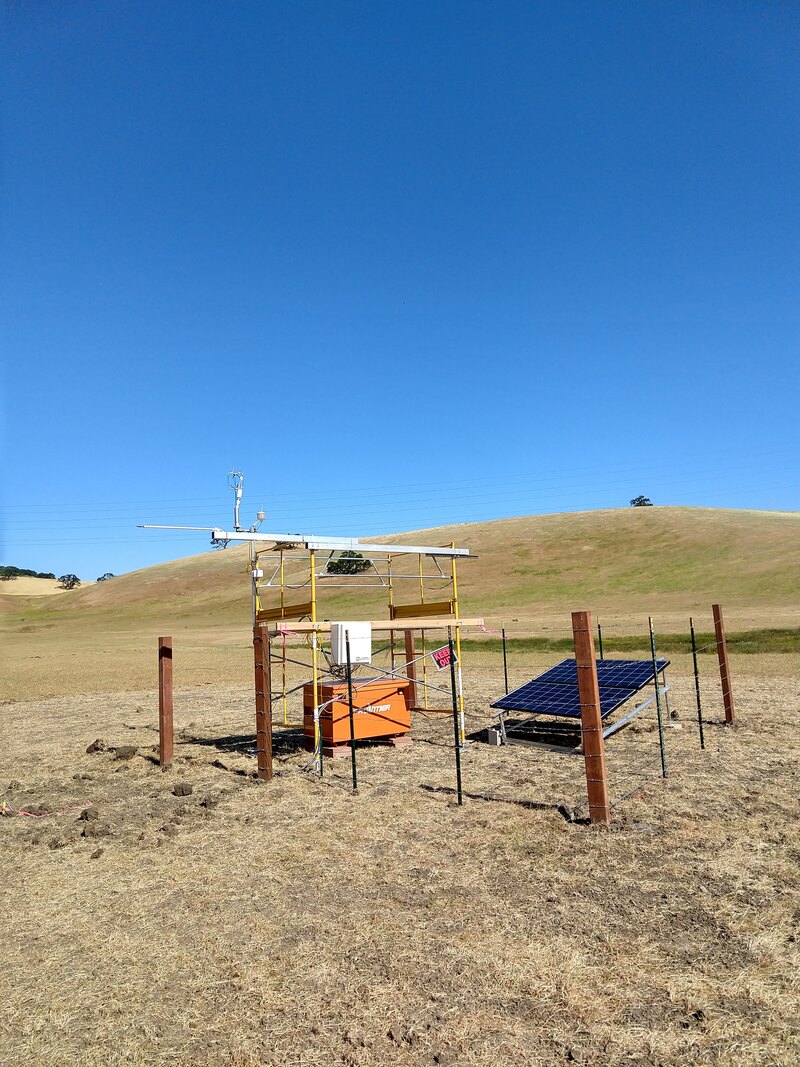
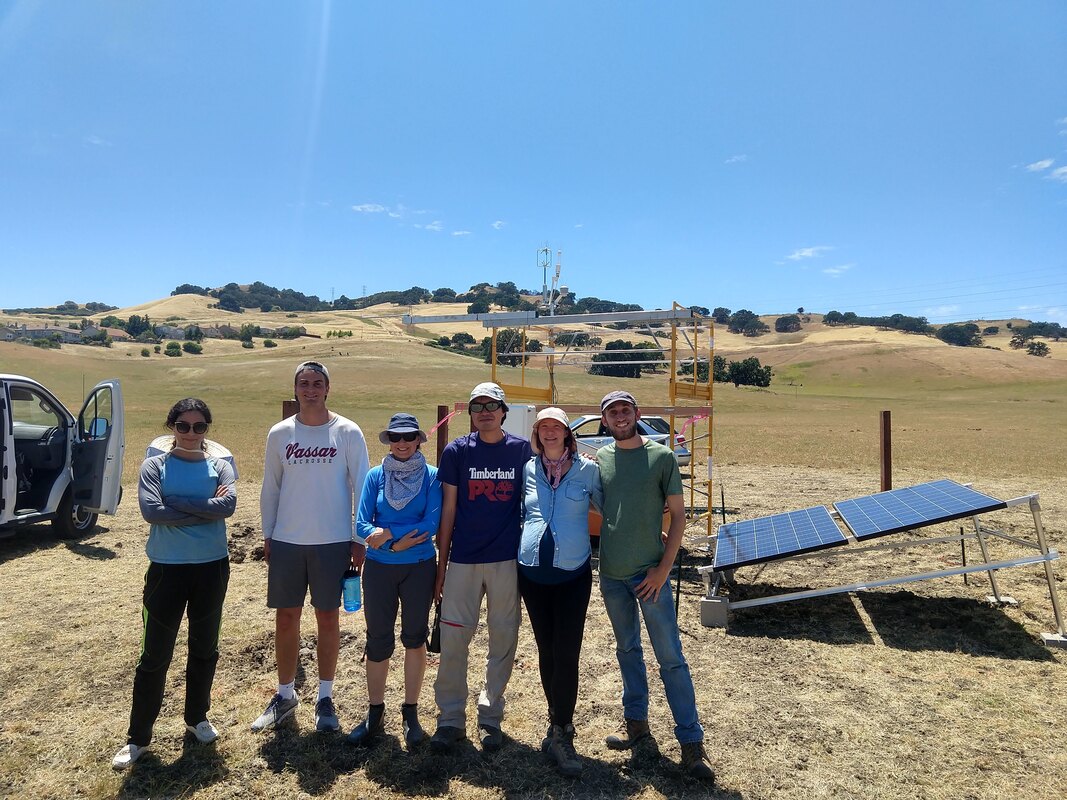
Compost amendments to rangelands have been shown to enhance soil carbon sequestration while simultaneously lowering greenhouse gas emissions from urban and agricultural waste streams. Amending soils with compost provides many co-benefits including reduced landfill and manure storage loads and emissions, increased agricultural production, enhanced drought resilience, and soil health. We are investigating the carbon sequestration potential of compost-amended rangelands at CSU East Bay's Concord Campus Galindo Creek Field Station. Carbon and water cycling will be investigated through ecosystem-scale measurements of carbon dioxide exchange and evapotranspiration via the eddy covariance method. The eddy tower was established in June 2019 and will be maintained prior to and following a one-time application of compost planned for fall 2020. This work is supported by the CA Strategic Growth Council as part of the Working Lands Innovation Center which aims to scale and sustain carbon dioxide capture and greenhouse gas emissions reductions by deploying a suite of cutting-edge soil amendment technologies (rock amendments, compost and biochar). |
Research in high temperature agroecosystems
|
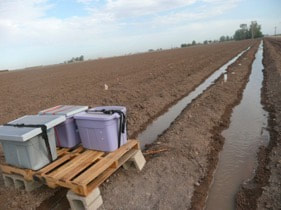
Agriculture in high temperature environments is widespread and will become increasingly prominent in a future warmer climate. Despite limited water supplies, flood-irrigation is commonly used in high temperature arid regions of California where high evaporation rates make these irrigation practices inefficient. Other agricultural practices, such as fertilization, have implications for water quality, nitrogen (N) cycling, and air quality yet are understudied in high temperature arid regions.
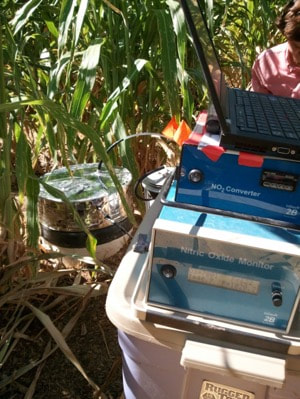
We are investigating the implications of these agricultural practices for water use and air quality in Sorghum and alfalfa at the UC Desert Research and Extension Center in the Imperial Valley, California, where air temperatures regularly exceed 45ºC. This work is in collaboration with UC Riverside and the University of Iowa. Our current research builds on previous work demonstrating that although Sorghum produced high yields, outperforming many US biofuel crops, there were significant environmental costs to that productivity. First, flood irrigation led to high evapotranspiration rates, similar to biofuels grown in the tropics such as Brazilian sugarcane. With high demands on limited water resources in the region, evaporative costs of flood-irrigated biomass production should be considered before investing in the expansion of biofuel production in the Imperial Valley. In addition, we observed unprecedented pulse soil nitric oxide (NO) emission responses to fertilization. Observed pulse NO emission responses to fertilization were up-scaled to the region, leading to significantly elevated concentrations of tropospheric O3, the principal component of smog. Limiting NO emissions may therefore have implications for human health in the Imperial Valley, a region that suffers from the highest rates of asthma hospitalizations in California. |